

- About MFS
- Male Infertility
- About Male Infertility
- Male Factor Infertility
- Male Infertility Causes
- Infertility Treatment Options
- Vasectomy Reversal
- Infertility & Genetic Testing
- Semen & Sperm Testing: SCSA
- Low Sperm Count
- Sperm Retrieval
- Varicocele Treatment
- Testicular Cancer & Fertility
- Spinal Cord Injury & Fertility
- Getting Pregnant: Tips & Tests
- Infertility FAQs
- Sexual Health
- Financing
- Resources
- Male Reproductive Resources
- MFS Video Library
- Our Mission - Helping Your Family Grow
- Dr. Bastuba Training & Qualifications
- Traveling To San Diego
- Success Stories - Vasectomy Reversal
- Vasectomy Reversal
- Vasectomy
- Male Fertility Treatment
- Sperm Retrieval Techniques
- Testicular FNA Mapping
- Giving back to the Community
- Dr. Bastuba & Families KUSI Interview
- Dr. Bastuba & Male Fertility Testimonials
- Dr. Bastuba on Penile Implants
- Dr. Bastuba on Erectile Dysfunction
- Male Sexual Dysfunction
- Female Sexual Dysfunction
- Testicular Sperm Extraction Surgery
- Enlarged Prostate Treatment
- MFS News & Updates
- Your First Consultation
- Patient Forms & Downloads
- General Urology Treatment
- Local Infertility Resources
- Online Websites & Resources
- Glossary
- Contact
Varicocele Treatment
Decreased Testicular Function due to Varicose Veins
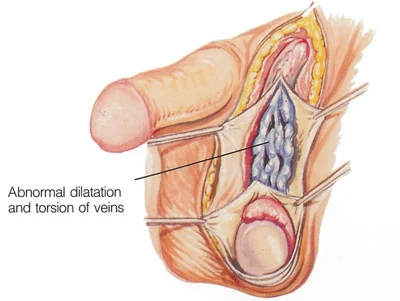
The scrotal varicocele is a well-recognized cause of decreased testicular function and is present in about 40% of infertile males and up to 80% of DI. A varicose vein disorder is a cause of male infertility but is fortunately, also the most surgically correctable. Once a varicocele is diagnosed, a medical history will be analyzed, the anatomy and function of the varicocele explained, along with the possible methods of surgical repair. See also our glossary definition of varicocele/varicose veins.
En Espanol: Varicocele Y Arregle De Varicocele
Varicocele Ligation
If a varicocele is found, sometimes surgery to ligate (tie off) the abnormally dilated veins is recommended. If the varicocele is of significant size (Grade II or Grade III), about two thirds of men undergoing the surgery will see some improvement in sperm quality. The reported pregnancy rates following surgery are in the range of 40%, but most pregnancies occur 6-9 months following surgery, so the age of the female partner needs to be a major consideration. If the initial sperm count and motility are in the severe male factor category, the couple might have to consider other options such as sperm retrieval and IVF.
- About Male Infertility
- Male Factor Infertility
- Male Infertility Causes
- Infertility Treatment Options
- Vasectomy Reversal
- Infertility & Genetic Testing
- Semen & Sperm Testing: SCSA
- Low Sperm Count
- Sperm Retrieval
- Varicocele Treatment
- Testicular Cancer & Fertility
- Spinal Cord Injury & Fertility
- Getting Pregnant: Tips & Tests
- Infertility FAQs